
Starting to run as a beginner can feel harder than you expected. You may get out of breath after just a few minutes, struggle to find a comfortable pace, or feel discouraged when other runners seem to move effortlessly. You might also worry about knee pain, choosing the right running shoes, or giving up after a few workouts. If any of this sounds familiar, you are not alone. Many new runners face these challenges, and you do not need to run fast or cover long distances to get started.
The good news is that you can build your running ability one small step at a time. A simple run-walk routine, comfortable shoes, enough recovery, and a realistic plan can help you develop confidence without pushing too hard. This guide explains how to start running for beginners, including what to wear, how to control your pace, how often to train, and how to stay motivated when progress feels slow. The goal is not to become a perfect runner overnight. It is to find a safe, manageable way to begin and keep moving forward at your own pace.
Start Running: The Quick Guide
- Start with run-walk intervals: alternate short, easy jogs with walking.
- Keep the pace comfortable: slow down enough to speak in short sentences.
- Begin with 2–3 sessions per week: leave recovery time between runs.
- Wear comfortable running shoes: choose a pair that fits well and feels good.
- Build gradually: repeat a week or take extra rest when needed.
New to exercise or managing a health concern? Ask a qualified healthcare professional if you are unsure how to begin.
Is Running Right for You as a Beginner?
Running can help you improve your fitness, spend time outdoors, and work toward a personal goal. You may want to become more active, support your health, manage stress, or prepare for your first 5K.
You do not need to know your exact goal before you start.
If you have not exercised for a long time, begin at a level that feels manageable. You can start with walking and add short jogging periods when you feel ready.
If you used to run but stopped, do not expect to return to your old pace right away. Your current fitness matters more than your past performance.
Remember: You are not competing with other runners. Your first goal is to build a routine that you can repeat.
If you have a health condition, have concerns about exercise, or are unsure how to begin safely, ask a qualified health professional for advice.
How to Start Running as a Complete Beginner
The easiest way to begin is to combine walking and jogging. This method gives your body time to adjust and helps you manage your breathing.
Follow these simple rules:
- Start with short workouts.
- Jog slowly enough to stay in control.
- Walk whenever you need a break.
- Leave time for rest between running days.
- Increase your effort gradually.
- Focus on consistency instead of speed.
You do not need to run for 30 minutes on your first day. Even a short workout can help you start building a routine.
If jogging feels too difficult right now, spend one or two weeks walking at a comfortable pace. Add short jogging intervals when you feel ready.
What Do You Need Before Your First Run?
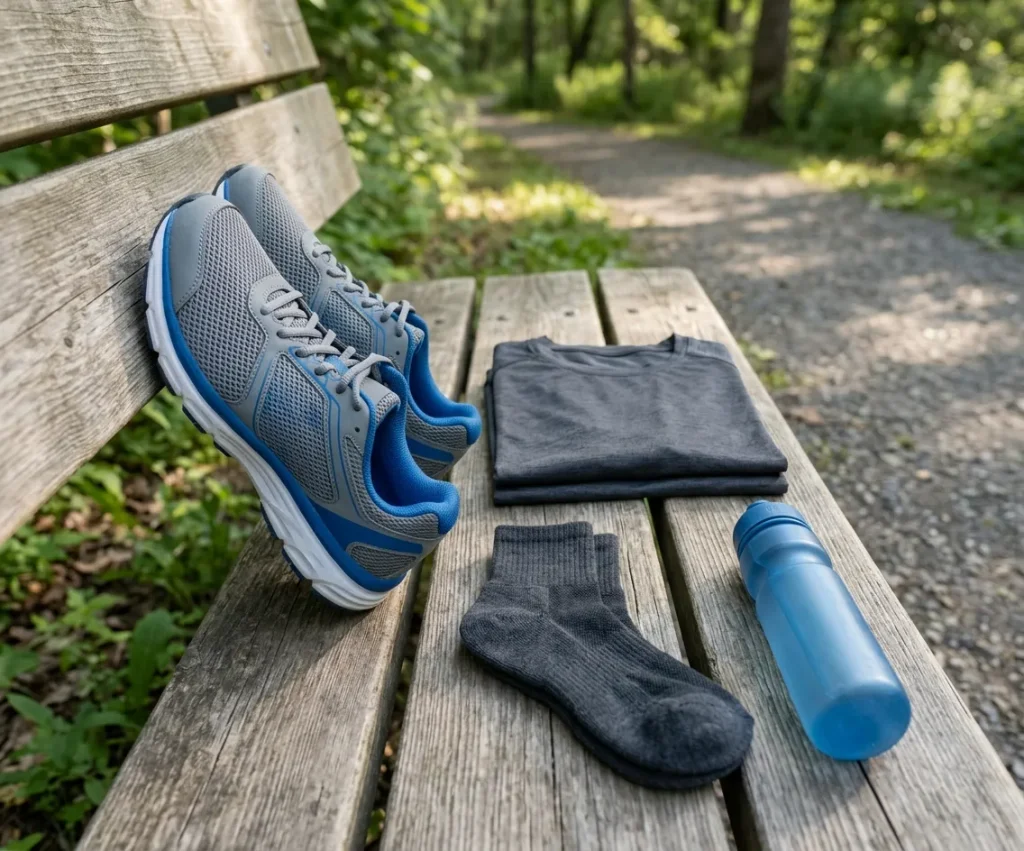
You do not need lots of equipment to start running. A few basic items can help you feel comfortable and safe.
How to Choose Running Shoes
Choose shoes that fit well and feel comfortable. Your toes should have enough room, and the shoes should not rub or cause pain.
You do not need the most expensive pair. Look for shoes that suit your feet and the places where you plan to run.
If you are unsure what to buy, visit a running store for help with fit. If your shoes cause ongoing pain, stop using them and seek advice if needed.
What Should You Wear?
Wear clothes that let you move freely. Choose breathable fabric in warm weather. In cold weather, wear layers that you can adjust.
Useful items may include:
- A comfortable shirt and shorts or running pants
- Socks that help prevent rubbing
- A supportive sports bra, if needed
- A light jacket in cool weather
- Sunscreen and a hat in sunny conditions
You do not need special running clothes to begin. Comfort matters more than style.
Where Should You Run?
Choose a place where you feel safe and relaxed. A park, running track, quiet street, or treadmill can work well.
A flat route may be easier when you are starting out. Hills can make your breathing harder, so you can add them later.
If you feel embarrassed about running in public, try a quiet route or a treadmill. You could also go with a friend. Remember that you do not need to prove anything to anyone.
Wear visible clothing in low light and stay aware of traffic and people around you.
Do You Need to Eat Before Running?
For a short, easy run, you may not need a special meal. If you feel hungry, try a small snack that you know agrees with your stomach.
Drink water as needed, especially in warm weather. Your needs may change with the length of your workout, the temperature, and how much you sweat.
Avoid trying new foods or drinks just before a run. Keep things simple while you learn what works for you.
Your First Running Workout: A Simple Step-by-Step Guide
Your first workout should feel manageable. You are learning how running feels, not trying to prove how fit you are.

Step 1: Walk for Five to Ten Minutes
Start with a comfortable, brisk walk. Let your body warm up before you jog.
Relax your shoulders and move your arms naturally. You should feel ready to begin, not tired before the workout starts.
Step 2: Jog for 30 Seconds to One Minute
Start with a gentle jog. Keep your steps comfortable and your pace slow.
You should not feel that you need to sprint. If you cannot speak in short sentences, slow down or return to walking.
Step 3: Walk for Two Minutes
After jogging, walk until your breathing feels more controlled.
Walking breaks are a normal part of beginner training. You are not failing when you walk. You are learning to manage your effort.
Step 4: Repeat the Intervals
Repeat the jogging and walking pattern about six times, if it feels comfortable.
If you get tired, shorten the jogging periods or take longer walking breaks. It is fine to do less on your first day.
Step 5: Cool Down
Finish with five minutes of easy walking. Let your breathing settle.
Notice how you feel after the workout. You may feel tired, but you should not need to push through sharp or worsening pain.
If you experience chest pain, faintness, severe dizziness, or unusual breathing problems, stop exercising and seek appropriate medical help.
A Beginner Running Plan for Your First Eight Weeks

Beginner Running Progress Tracker
Use this checklist to plan your week. Mark each session complete when you finish it.
| Session | Done | How did it feel? |
|---|---|---|
| Run-walk 1 | ☐ | Easy / OK / Hard |
| Run-walk 2 | ☐ | Easy / OK / Hard |
| Optional session 3 | ☐ | Easy / OK / Hard |
Also note your energy, sleep, and any pain. Keep rest days between sessions, and repeat the same week if you need more time.
A beginner running plan helps you know what to do each time you exercise. It also helps you build your running time without rushing.
The plan below is a sample progression, not a clinically validated program. It uses three sessions per week. If you are new to exercise or have low fitness, you can start with two sessions per week.
Before each session, walk for five minutes to warm up. Finish with five minutes of easy walking. Leave a rest day between running sessions when possible.
| Week | Main workout | Goal |
|---|---|---|
| 1 | Jog for 30 seconds, then walk for 2 minutes. Repeat 6 times. | Get used to jogging |
| 2 | Jog for 30 seconds, then walk for 90 seconds. Repeat 8 times. | Build comfort |
| 3 | Jog for 1 minute, then walk for 2 minutes. Repeat 6 times. | Build a routine |
| 4 | Jog for 1 minute, then walk for 90 seconds. Repeat 8 times. | Increase running time |
| 5 | Jog for 2 minutes, then walk for 2 minutes. Repeat 5 times. | Improve endurance |
| 6 | Jog for 3 minutes, then walk for 2 minutes. Repeat 4 times. | Run for longer periods |
| 7 | Jog for 4 minutes, then walk for 2 minutes. Repeat 3 times. | Build confidence |
| 8 | Jog for 5 minutes, then walk for 2 minutes. Repeat 3 times. | Extend easy running intervals |
These workouts are examples. They may not suit every beginner. Stay at the same level if the next week feels too hard. You can repeat a week or return to shorter jogging intervals.
Do not move forward just because the calendar says you should. Your goal is to build a routine that feels manageable.
If you want a more established, step-by-step training schedule, try the NHS Couch to 5K plan. It provides a structured path for beginners who want to work toward running 5K.
How Many Days a Week Should a Beginner Run?
Two or three running sessions per week can be a good starting point. Choose two days if you need more recovery time. You can add another session when your body feels ready.
Rest days matter because your body needs time to adjust to a new activity. Easy walking is fine on rest days if it feels comfortable.
How Fast Should Beginners Run?
One common mistake is running too fast at the start. You may see other runners moving quickly and feel that you should do the same.
You do not need to match their speed.
Start with an easy pace. Your breathing should feel controlled, and you should be able to recover during your walking breaks.
Use the Talk Test
The talk test is a simple way to check your effort.
If you can speak in short sentences while jogging, your pace may be suitable for an easy workout. If you can only say a few words before gasping, slow down or walk.
You do not need a smartwatch or a running app to use this method.
What If You Get Out of Breath Quickly?
Getting out of breath can feel discouraging, especially when other people seem to run with ease.
First, slow down. You may be jogging faster than your current fitness allows.
Next, take a walking break. Let your breathing settle before you try jogging again.
You can also shorten your running intervals. Try 20 or 30 seconds instead of one minute.
With regular practice, easy running may become more comfortable. Progress takes time, and each person’s experience is different.
If your breathing feels unusual, severe, or out of proportion to your effort, stop and seek medical advice.
How Should a Beginner Run?
You do not need perfect running form to get started. Focus on moving in a relaxed and comfortable way.
Keep your head up and look ahead. Relax your shoulders and bend your arms naturally. Let your arms swing as you move.
Take steps that feel natural. Do not force long strides or try to copy another runner’s style.
If running feels uncomfortable, slow down or take a walking break. If you have ongoing pain, stop and seek advice from a qualified health professional.
Is It Okay to Walk During a Run?
Yes. Walking breaks are useful for beginners.
They help you manage fatigue and keep your workout under control. You can use them for as long as they help you.
The goal is not to avoid walking at all costs. The goal is to build a routine that you can repeat safely.
How to Stay Motivated When Running Feels Hard
Knowing how to run is only part of the challenge. You also need a way to keep going when you feel tired, busy, or unmotivated.
You do not have to love every workout. Start by making running easier to fit into your life.
Set Small and Realistic Goals
Large goals can feel overwhelming when you are new to running. Start with a goal you can reach soon.
For example, you could aim to:
- Complete two running sessions this week.
- Jog for 30 seconds at a time.
- Follow your plan for two weeks.
- Walk and jog around a nearby park.
- Build a routine before working toward a 5K.
Small wins help you see progress. Once a goal feels easy, choose a new one.
Make It Easy to Start
Prepare your running clothes before your workout. Choose your route in advance and decide when you will go.
If you feel too tired to run, tell yourself you will start with a five-minute walk. After that, you can decide whether to continue.
This approach can make the first step feel less difficult.
Plan Your Next Run Before It Starts
It is easier to follow a plan when you know exactly what to do. Before your next run, decide three things:
- When: Choose a time that fits your day.
- Where: Pick a safe route that is easy to follow.
- What: Decide how long you will walk and jog.
For example, you could plan a short workout after work on Wednesday. You might walk for five minutes, jog for 30 seconds, and walk for two minutes. Repeat the intervals if you feel comfortable.
Put your clothes and shoes ready beforehand. This removes one more reason to delay your workout.
If you do not feel motivated, start with a five-minute walk. You can decide whether to continue once you are moving.
Track Your Progress
You do not need to measure every mile or every second.
Use a notebook, calendar, or simple phone note to record your workouts. Write down how long you jogged, how you felt, or whether you completed your planned session.
Look for changes over several weeks, not after every workout. Your progress may show up as better consistency, easier breathing, or longer jogging intervals. Speed is only one way to measure improvement.
A Simple Way to Track Your Running Progress
After each workout, record:
- The date of your run
- How many jogging intervals you completed
- How the workout felt
- Any discomfort you noticed
- One thing that went well
For example, you might write, “I completed six short jogging intervals and felt less out of breath than last time.”
These notes can help you see progress when it feels slow. They can also help you notice when a workout is too hard and your plan needs adjusting.
What If You Miss a Run?
Missing a workout does not mean you have failed. Work, family, weather, and tiredness can all affect your plans.
Do not try to make up for a missed session by running extra hard. Return to your usual routine when you can.
If you have missed several weeks, start at an easier level. You may need to repeat an earlier part of your plan.
The most useful plan is one that lets you start again without guilt.
Common Beginner Running Mistakes to Avoid
A few simple changes can help you feel more comfortable and reduce avoidable setbacks.
Trying to Run Too Fast
Running fast can make you tired before your workout is over. Keep your pace easy and use the talk test.
You should not need to race anyone during a beginner session.
Doing Too Much Too Soon
It can be tempting to run longer every day when you feel excited. However, your body needs time to adjust.
Increase your running time in small steps. If you feel worn out or the workouts become too difficult, reduce the effort.
Skipping Rest Days
Rest is part of your training. Your body needs time to recover between sessions.
Plan rest days and avoid hard running sessions on consecutive days when you are just starting. Easy walking may be enough activity on recovery days.
Comparing Yourself With Other Runners
Some beginners can jog for several minutes on their first day. Others need more time to reach that point.
Both experiences are normal.
Focus on your own progress. Your goal is to improve from your starting point, not to keep up with someone who has been running for years.
Ignoring Pain
Mild muscle soreness may occur when you start a new activity. Sharp, worsening, or persistent pain should not be ignored.
Stop if you feel significant pain. If it continues or worries you, seek advice from a qualified health professional.
How to Recover and Run Safely
Safe training is about listening to your body and making sensible choices.
How to Recover Between Runs
Rest is part of your training. Your body needs time to adjust when you begin a new activity.
Leave a rest day between running sessions when possible. Try to get enough sleep, eat balanced meals, and drink water throughout the day.
Mild muscle soreness can happen when you try a new activity. However, sharp, worsening, or lasting pain should not be ignored.
Stop running if you have significant pain. Seek advice from a qualified health professional if the pain continues or you are worried about an injury.
Do not try to make progress by running through pain. It is better to pause and adjust your plan than to force a workout that does not feel right.
Adjust to the Weather
Hot weather can make running harder. Try cooler parts of the day, wear light clothing, and drink water as needed.
In cold weather, use layers. On wet or icy paths, slow down and watch your footing.
Know When to Ask for Help
If you have ongoing pain, repeated dizziness, or concerns about how your body responds to running, speak with a qualified health professional.
Stop exercising and seek urgent help for severe or sudden symptoms, such as chest pain, fainting, or serious breathing difficulty.
How to Work Toward Your First 5K
A 5K is about 3.1 miles. It can be a useful goal once you have built a regular running routine.
You do not need to run the whole distance without stopping. Many beginner plans include walking breaks.
Before starting a 5K plan, focus on completing your current workouts at a comfortable effort. Then choose a beginner plan that matches your fitness and gives you enough time to prepare.
Keep your goal realistic. You can aim to finish the distance rather than worry about your time.
If a 5K is not your goal, that is fine. Running for fitness, enjoying the outdoors, or building a regular exercise habit are useful goals, too.
Frequently Asked Questions About Starting Running
How long should a beginner run?
Start with short jogging intervals mixed with walking. For example, jog for 30–60 seconds and walk for two minutes. Repeat the pattern if it feels comfortable. Include a warm-up and cool-down.
Is running three times a week enough?
Three sessions per week can be enough for many beginners. Two sessions may be a better starting point if you have low fitness or are returning after a long break. Leave time for recovery.
How long does it take for running to get easier?
This depends on your fitness, health, training, and recovery. Some people notice changes within a few weeks, while others need longer. Keep your workouts easy and progress at a pace that suits you.
Can I start running if I am unfit?
You can often begin with walking and add short jogging intervals over time. Start at a level you can manage and increase activity gradually. If you have health concerns, seek advice from a qualified health professional.
Is it normal to feel embarrassed when running?
Yes. Some beginners worry that other people will judge their speed or fitness. You can choose a quiet route, run with a friend, or use a treadmill. Remember that you do not need to prove anything to anyone.
What should I do if I cannot finish the workout?
Stop or slow down if the workout feels too hard. Take a longer walking break or end the session. Next time, try shorter jogging intervals. You can repeat the same workout until it feels more manageable.
Should I run every day as a beginner?
No. Daily running is not necessary when you are starting out. Two or three sessions each week can help you build a routine while allowing time for recovery.
How do I stay motivated to run?
Set small goals, plan your running days, and record each workout. Choose routes you enjoy and celebrate small wins. If you miss a session, return to your routine without blaming yourself.
Conclusion
Learning how to start running for beginners is less about speed and more about patience, consistency, and listening to your body. You may need walking breaks, repeat a week of your training plan, or take extra rest when you feel tired. These are normal parts of learning, not signs of failure. A gradual run-walk approach, a comfortable pace that lets you speak in short sentences, and two or three manageable sessions each week can help you build a routine. If you have a health condition, ongoing pain, or concerns about starting exercise, speak with a qualified healthcare professional before increasing your activity.
The most useful advice for a new runner is to focus on progress you can maintain rather than results you want immediately. Set a small goal for your next session, track how you feel, and give yourself credit for showing up. Established beginner programs, such as the NHS Couch to 5K plan, can also provide structure if you prefer a guided schedule. You do not have to enjoy every run or improve every week to keep going. Start where you are, adjust when needed, and let consistency build your confidence over time.